This is default featured slide 1 title

Go to Blogger edit html and find these sentences.Now replace these sentences with your own descriptions.This theme is Bloggerized by Lasantha Bandara - Premiumbloggertemplates.com.

This is default featured slide 2 title

Go to Blogger edit html and find these sentences.Now replace these sentences with your own descriptions.This theme is Bloggerized by Lasantha Bandara - Premiumbloggertemplates.com.

This is default featured slide 3 title

Go to Blogger edit html and find these sentences.Now replace these sentences with your own descriptions.This theme is Bloggerized by Lasantha Bandara - Premiumbloggertemplates.com.

This is default featured slide 4 title

Go to Blogger edit html and find these sentences.Now replace these sentences with your own descriptions.This theme is Bloggerized by Lasantha Bandara - Premiumbloggertemplates.com.

This is default featured slide 5 title

Go to Blogger edit html and find these sentences.Now replace these sentences with your own descriptions.This theme is Bloggerized by Lasantha Bandara - Premiumbloggertemplates.com.

Friday, 9 March 2012

Physics Form 5 (Chapter 1)

The study of matter
Chapter 1: Waves
Objectives: (what you will learn)
1)understanding Waves
2)reflection of waves
3)refraction of waves
4)diffraction of waves
5)interference of waves
6)analysing sound waves
7)analysing electromagnetic waves

Understanding Waves:
1.A wave is a traveling disturbance from a vibrating or oscillating source.
2.A wave carries energy along with it in the direction of its propagation.
3.A wave is a mean of energy transfer through vibration.

Waves:
Transverse Wave >>

Particles in the medium vibrate in a direction perpendicular to the direction of wave propagation. Perpendicular = 90o to the line of direction.

Longitudinal Wave >>

Particles in the medium vibrate in a direction parallel (0o to line of direction) to the direction of wave propagation. Examples: wave in a slinky spring sound wave

Surface Waves >>
This is both transverse waves & longitudinal waves mixed in one medium. Examples: earthquake or seismic wave shear wave in a slinky spring
Wavefront :
A surface on the wave where all particles vibrate in phase (coming together to the same level).
Oscillations :
Vibration or oscillation of particles in a medium is like oscillation of simple pendulum or loaded spring.

Complete Oscillation >>
Complete cycle; e.g. motion from A to B & back to A.
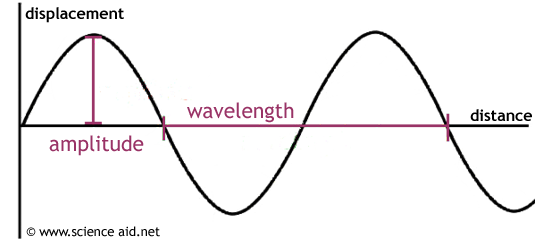
Amplitude, a >>
Maximum displacement from equilibrium position that is halfway between crest (high) & trough (low).
Period, T >>
Time taken for a complete oscillation.
Frequency, f >>
Number of complete oscillation in one second;
f = 1/T

Speed of wave, v >>
Distance traveled by wave per second, v = fλ
Free Oscillation >>
Occurs when a system oscillates without any external force acting on it.


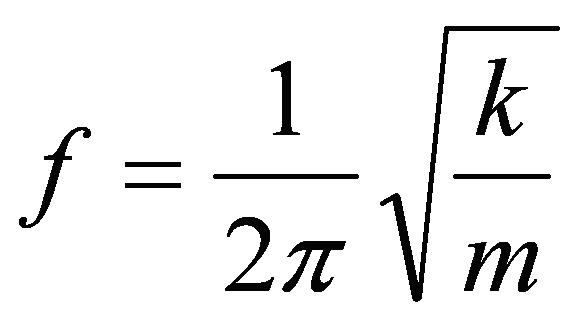
Natural Frequency, fn >>
Frequency of a free oscillation.

Sunday, 4 March 2012

Add Math Form 5 (Chapter 1)


[Add Maths Form 5] d For Difference
An arithmetic progression/sequence is a sequence of numbers in which the difference between two successive number is a constant, d.

Thus, the form of an arithmetic sequence is a , a + d , a + 2d , a + 3d , …

Eg:
2, 5, 8, 11, 14, … is an arithmetic progression/sequence with common difference 3.

To find the n-th term in an arithmetic sequence, use Tn = a + (n - 1)d

Example:

1) Find the value of x, in which lg x, lg(x + 2) and lg(x + 16) are three consecutive terms of an arithmetic progression.

Solution:
The difference between two consecutive term in arithmetic progression is the same.
So, T2 - T1 = T3 - T2
lg(x + 2) - lg x = lg(x + 16) - lg(x + 2)
lg( (x + 2) / x ) = lg( (x + 16) / (x + 2) )
(x + 2) / x = (x + 16) / (x + 2)
(x + 2) 2 = x2 + 16x
x2 + 4x + 4 = x2 + 16x
4 = 12x
x = 1/3


2) An arithmetic progression whose first term is 2 includes three consecutive terms that have a sum of 51. The last of these terms is 6 less than the 9th term of the progression. Find the value of each of the three terms.

Solution:
Let a = 2 be the first term
Then, write the arithmetic progression as: 2, ….x, x + d, x + 2d
Since the last of these terms, x + 2d, is 6 less than T9, so
T9 – (x + 2d) = 6
a + 8d – x – 2d = 6
2 + 8d – x – 2d = 6
6d – x = 4 ………………… ( i )

Also, since x + x + d + x + 2d = 51
3x + 3d = 51
x + d = 17 ………………… ( ii )

( i ) + ( ii )

7d = 21
d = 3, x = 14

Hence, the three terms are 14, 17 and 20 respectively

Chemistry Form 5 (Chapter 1)


Catalyst is a chemical substance that change the rate of chemical reaction.

Characteristics of catalyst:
Catalyst remains chemically unchanged during reaction. Its chemical composition still the same before and after reaction.
Catalyst only change the rate of reaction.
Catalyst does not change the quantity of the product formed.
Catalyst is specific in its action.
Only a small amount of catalyst is needed to achieve a big increase in rate of reaction.

How catalyst increase the rate of reaction:
When a positive catalyst is used in a chemical reaction, it enables the reaction to occur through an alternative path which requires lower activation energy.
As a result, more colliding particles are able to overcome the lower activation energy.
This causes the frequency of effective collision to increase.
Hence, the rate of reaction increases.
Decomposition of hydrogen peroxide by catalyst of manganese (IV) oxide

Saturday, 3 March 2012

Science Form 5 (Chapter 1)


What is microorganisms?

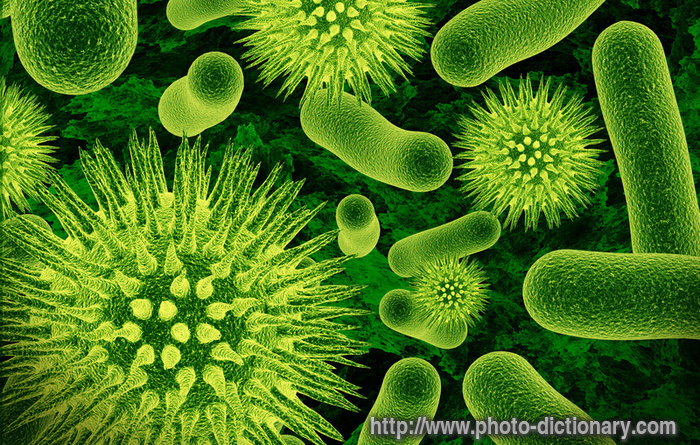
Microorganisms also known as microbes. Microorganisms are living things which are so small that they cannot be seen with the naked eye and are only visible under the microscope.

Who discovered the first microorganism?


Anton Van Leewenhoek (1632-1732) was the first person to discover the existence of microorganisms, when he used the simple microscope that he himself invented to view a drop of rainwater which he collected from his roof.

Types of Microorganisms

Based on their characteristics ( appearance, shape, size, method of reproduction, nutrition and habitat), microorganisms can be classified into 5 groups:

1)Bacteria
2)Fungi
3)Protozoa
4)Virus
5)Algae


BACTERIA


CHARACTERISTICS
SEE BACTERIA CELL STRUCTURE

-Unicellular organisms
-They have cell wall made of peptidoglycan
-Some have additional slimy capsule outside their cell wall for added protection
-Beneath the cell wall is its plasma membrane
-Bacteria do not have nuclear membrane
-Some bacteria have one or more tail-like structure called 'flagella' which are used for swimming
-Some bacteria also have hundreds of hairlike structures known as pilli

SHAPE
-Classified according to their shapes
-They can be spherical known as cocci, rod-shaped known as bacilli, comma shaped known as vibrios and spiral known as spirilla
SIZE
-Diameter ranges from 0.5 -1.0 micrometres
-Only visible using a high powered micoscope

METHOD OF REPRODUCTION
Sexually by a process called conjugation or Asexually by formation of spores or binary fission
NUTRITION
Photosynthesis, Chemosynthesis, Saprophytic and Parasitic. Bacteria stores food in the form of glycogen granules in its cytoplasm.
HABITAT
Can be found almost everywhere (foods, air, water, soil, on any surfaces (such as table tops), on the outside as well as inside of organisms especially in the intestines).

MODE OF RESPIRATION
-Some are aerobic, requiring oxygen to survive
-Some are anaerobic, do not need oxygen to survive
-Some can live in the presence or absence of oxygen

FUNGI


CHARACTERISTICS
Do not contain the green pigment chlorophyll, so they have to take in nutrients from external. Fungi may be unicellular or multicellular.
SIZE
10 - 100 micrometres

METHOD OF REPRODUCTION
Asexually through budding or formation of spores and sexually through conjugation

NUTRITION
parasitism and saprohytism

HABITAT
Dark, moist, warm environment

EXAMPLE
Yeast, Mucor/ Mould

PROTOZOA


CHARACTERISTICS
-Unicellular organisms
-Move with the help of cillia which continuously beat against the water
in diagonal pattern

METHOD OF REPRODUCTION
Asexually through binary fission or sexually by conjugation

NUTRITION
-Parasitism, saprophytism or autotrophs
-Cilia/ cilium (hair like structures) send food to oral groove

HABITAT
Soil, moist area, live in water ( Amoeba) or inside the body of organisms (Plasmodium)

EXAMPLES
Amoeba, Plasmodium, Paramecium

VIRUS
CHARACTERISTICS

SEE VIRUS CELL STRUCTURE
-smallest microorganisms
-do not carry out any characteristics of living things
-when outside a cell, it forms a crystal
do not show cell organization

SHAPE
Maybe spherical, polyhedral, rod-shaped or rocket shaped

SIZE
Sizes ranges from about 20 - 400 nm in diameter

METHOD OF REPRODUCTION
They can only multiply inside the living cells (host cell) of animals or plants or other microbes. This process harms the host, resulting in a disease.

NUTRITION
Parasitic

HABITAT
living cell (host cell)

EXAMPLE
influenza virus (spherical), tobacco mosaic virus (rod-shaped)

ALGAE

CHARACTERISTICS
-Simple aquatic plant
-No proper roots, stems, leaves or vascular system
-contains chlorophyll

SIZE
1 - 10000 micrometres

METHOD OF REPRODUCTION
Asexually through binary fission or Sexually by conjugation

NUTRITION
Photosynthesis (most algae have pigments which use the wavelength that penetrate water)

HABITAT
Freshwater and marine (saltwater), soil, bark of trees

EXAMPLE
chlamydomonas (unicellular), spirogyra

Mathematics Form 5 (Chapter 1)


FORM 5/Topic 1 - NUMBER BASES
1.1 BASE 2
Concept: It is easy to understand the concept by looking at this table.

28 27 26 25 24 23 22 21 20 INDEX
256 128 64 32 16 8 4 2 1 BASE 10
BASE 2

Info: Base 10 uses the digits 0,1,2,3,4,5,6,7,8,9.
Base 2 only uses the digit 0 and 1
How to convert numbers from Base 10 to Base 2?
e.g. 310 = 112 (by adding 2 + 1) read as one, one.
510 = 1012 (by adding 4 +0+1) read as one zero one
810 = 10002 (by adding 8+0+0+0) read as one zero zero zero
1310 = 11012 (by adding 8+4+0+1) read as one one zero one.

By using the same proses, you can convert numbers from Base 2 to Base 10.

e.g. 1112 = 710 (4+2+1)
101012 = 2110 (16+0+4+0+1)
1110012 = 5710 (32+16+8+0+0+1)


1.2 BASE 8
By using the same ideology, we can do the same to numbers in Base 8.


8⁴ 8³ 8² 8¹ 8⁰ INDEX
4096 512 64 8 1 BASE 10
BASE 8


Remember: Base 8 uses digits 0,1,2,3,4,5,6,7. There are no digits 8 and 9.

Converting Numbers from Base 10 to Base 8 or from base 8 to Base 10
a) 7₁₀ = 7₈
b) 8₁₀ = 10₈ (1x8 + 0x1)

c) 14₁₀ = 16₈ (1x8 + 6x1)

d) 45₁₀ = 55₈ (5x8 + 5x1)
e) 249₁₀ = 371₈ (3x64 + 7x8 + 1x1)
Similarly:
f) 15₈ = 13₁₀ (8 + 5)

g) 134₈ = 92₁₀ (64 + 24 + 4)


1.3 BASE 5
Base 5 uses digits 0,1,2,3,4 only.


5⁴ 5³ 5² 5¹ 5⁰ INDEX
625 125 25 5 1 BASE 10
BASE 5

Converting numbers from Base 10 to Base 5 and visa versa.

a) 20₅ = 40₁₀ (4x5 + 0x1)

b) 78₅ = 303₁₀ (3x25 + 0x5 + 3x1)

c) 246₅ = 1441₁₀ (1x125 + 4x25 + 4x5 + 1x1)